The Moment That Catches You Off Guard
It’s halftime at your kid’s basketball game. The gym is buzzing — bleachers full, kids running to the concession stand, whistles blowing.
Suddenly, you realize you’ve lost sight of your youngest for just a moment. Your heart jumps.
That jolt isn’t paranoia. It’s instinct — God-given, nudging you to notice what matters.
Why Awareness Matters in Everyday Chaos
Loud, crowded places amplify risk. We’re distracted, our guard slips, and a single lapse feels overwhelming. But awareness in chaos isn’t about fear — it’s about anchoring peace.
Simple habits change everything:
Choose your anchor. Sit or stand near a clear landmark or exit.
Check-in moments. A quick glance or head nod to reconnect.
Family signals. One word or gesture that cuts through the noise.
A Parent’s Story
A dad once told me his most anxious moment wasn’t at a big event — it was when his son darted down the wrong hallway after a school assembly. The crowd swallowed him for just 30 seconds, but it felt like forever.
Once he practiced a plan — where to meet, what signal to use — that fear lost its grip.
The Principle
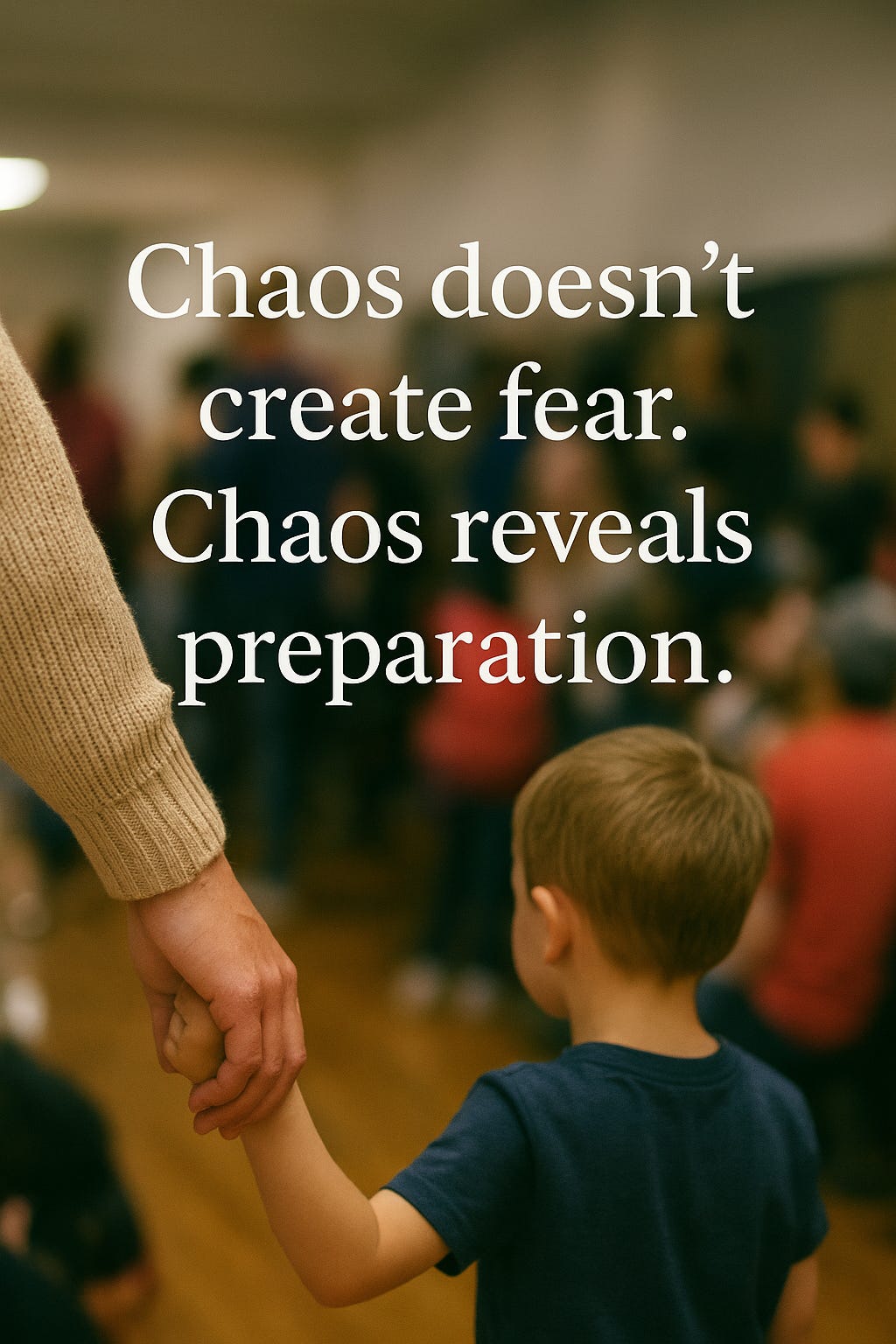
Chaos doesn’t create fear.
Chaos reveals whether you’re prepared.
Preparedness lets you breathe even when the world around you is loud and fast.
Try This This Week
Next time you’re in a busy setting — a school event, church gathering, or ballgame — practice:
Pick a landmark. Tell your family, “This is our regroup point.”
Create a micro-signal. A word, hand squeeze, or nod.
Do a peace check. Pause, breathe, and remember — you’re training, not panicking.
Takeaway
Peace doesn’t come from quiet surroundings.
It comes from confidence in the middle of noise.
Share This Thought
“Chaos doesn’t create fear. Chaos reveals preparation.”
Next Step
When’s the last time chaos rattled your peace? Hit reply — your story may help another parent who feels the same.